For Business Use Only. Does Not Ship to Residential Addresses. For use inside an Analyzer, Sold Separately.
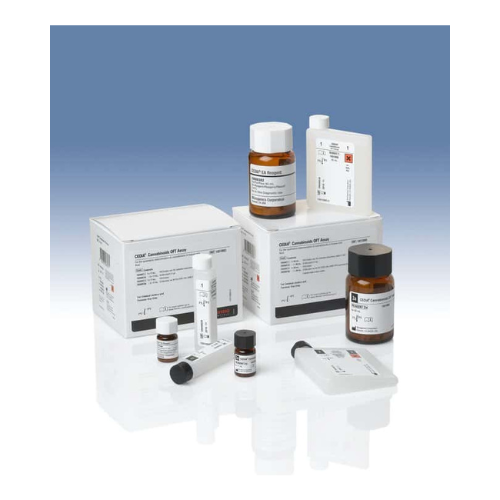
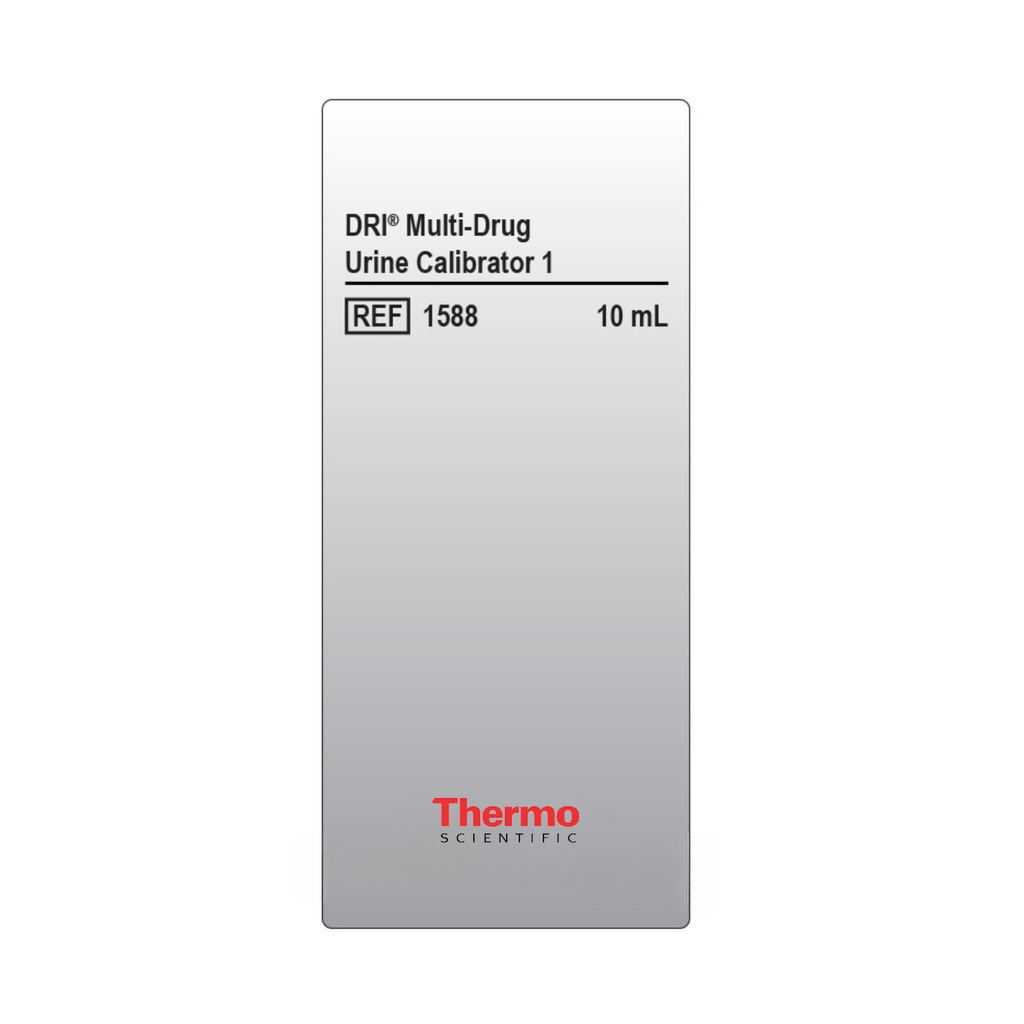
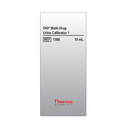
Thermo Kit MD Cal 1 10mL
In Stock
Product code: T-1588
MPN: 1588
Manufacturer: Thermo Scientific
Shipping Weight: 2.00lbs (0.91kg)
Specifications
- Concentration: Multianalyte
- Storage Requirements: 2° to 8°C
- Packaging: 1 Bottle
- Quantity: 10mL
Intended Use
The DRI® Multi-Drug Calibrators are intended for the calibration and validation of drugs of abuse enzyme immunoassays for the detection of amphetamines, barbiturates, benzodiazepines, cocaine metabolites, methadone, methaqualone, morphine, phencyclidine and propoxyphene in human urine.
Description of the Multi-Drug Calibrators
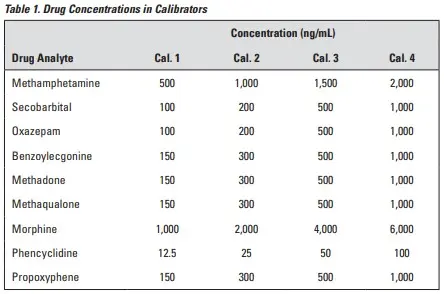
The DRI Multi-Drug Calibrators are human urine-based and ready-to-use. They are prepared by spiking negative urine with known quantities of d-methamphetamine, secobarbital, oxazepam, benzoylecgonine, methadone, methaqualone, morphine, phencyclidine and propoxyphene. Calibrator 2 is used as a qualitative cutoff reference for distinguishing from “positive” and “negative” samples. When a rough estimate of drug concentration is required, a calibration curve can be established with the Negative Calibrator and Calibrators 1-4. The concentrations for each drug in these calibrators are outlined in Table 1.