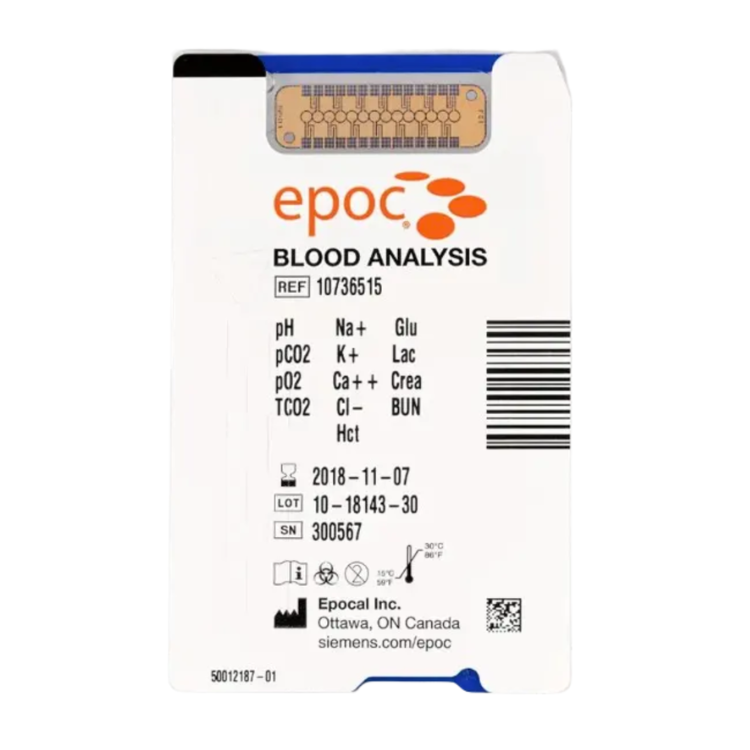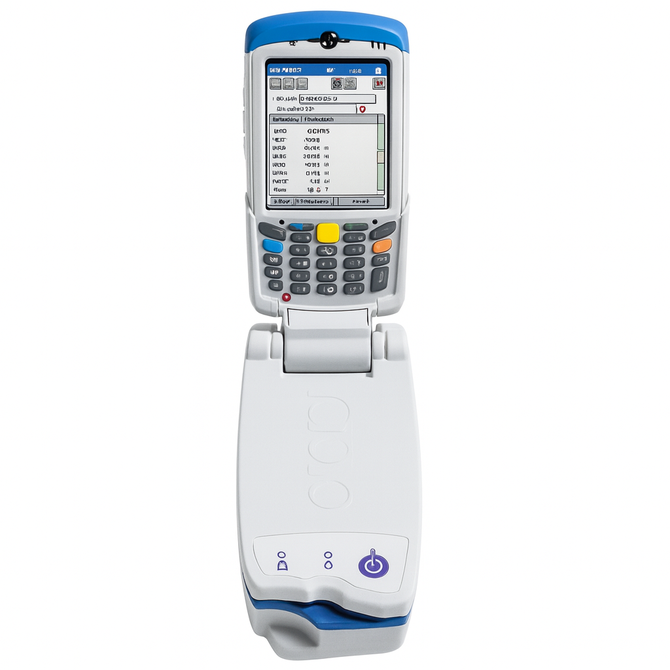
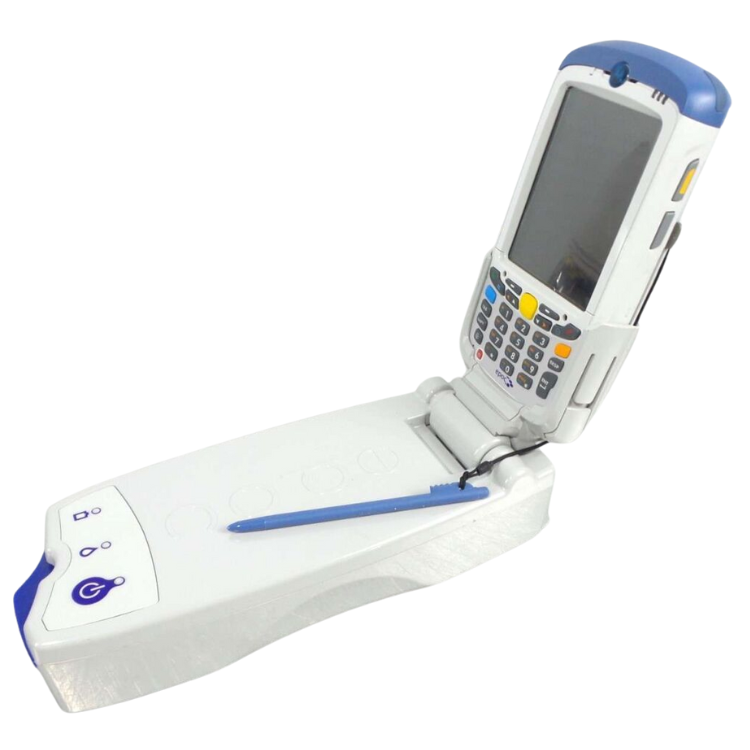
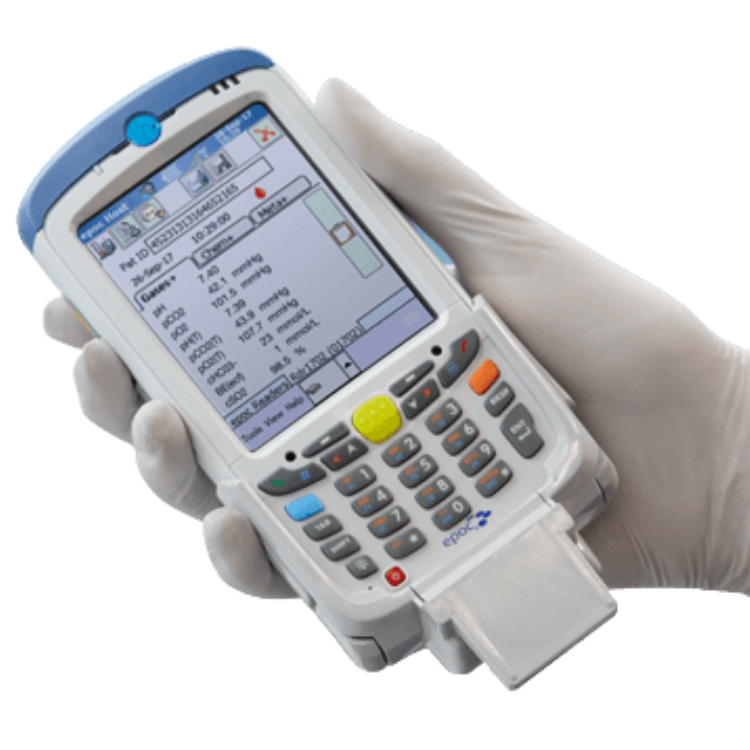
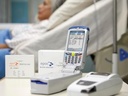
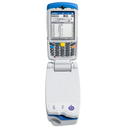
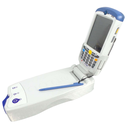
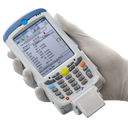


Get bedside blood gas results in under a minute - for a fraction of what the new EPOC NXS costs. Same test cards. Same accuracy. Different price tag.
*includes epoc® Reader 10736398 and Host2 Motorola 10736387
The Siemens EPOC delivers 13 analytes from a single test card right at the patient's bedside. Blood gases, electrolytes, metabolites, and hematocrit - all in less than 60 seconds after sample introduction. No sending samples to the lab. No waiting. No transcription errors.
The original EPOC uses the same Reader and the same BGEM Test Cards as the newer NXS model. The only difference is the handheld Host computer. Your clinical results are identical. Your budget impact is not.
Why labs choose refurbished EPOC systems from Block Scientific:

Cut equipment costs significantly
Same clinical capability, fraction of the investment.

Test cards ship from US inventory
No waiting weeks for consumables.

Service that costs up to 50% less
Local technicians who know these systems.

Trade in your old blood gas analyzer
Your i-STAT or benchtop unit has value.

90-day to 1-year warranty
Full protection on every refurbished system.
Siemens EPOC specifications that matter
The EPOC system has three components: a handheld Host computer, a wireless Reader that performs the analysis, and single-use BGEM Test Cards. The Reader handles all the electrochemistry. The Host displays results and transmits them to your HIS/EMR. Simple.
Core performance metrics
What sets the EPOC apart from benchtop blood gas analyzers

True point-of-care means results where the patient is.
Benchtop analyzers live in the lab. The EPOC lives wherever you need it - the ICU bed, the trauma bay, the OR table. When a ventilator adjustment can't wait for transport time, the EPOC eliminates that delay entirely. Your respiratory therapist gets the pCO2 they need while still standing at the bedside.

Room temperature card storage changes your workflow.
Competing POC systems require refrigerated cartridges, temperature logs, and equilibration time before use. EPOC cards store at room temperature with up to 5 months shelf life. Stock them in the unit, the crash cart, or the transport bag. No cold chain. No waiting for cards to warm up. No expired inventory from temperature excursions.

Wireless connectivity eliminates the docking station bottleneck.
Results transmit directly to your EMR via Wi-Fi the moment testing completes. No walking back to a docking station. No manual transcription. No delays between result and documentation. When you're managing a crashing patient, that's one less thing to think about.
Complete test menu from a single card
The BGEM Test Card delivers 13 measured analytes plus calculated values - everything you need for blood gas and metabolic assessment on one card. No choosing between cartridge types. No running multiple tests.

Measured analytes
Blood gases: pH, pCO2, pO2
Electrolytes: Sodium, potassium, chloride, ionized calcium
Metabolites: Glucose, lactate, BUN, creatinine
Hematology: Hematocrit
Calculated values
The system automatically calculates: bicarbonate, total CO2, base excess, oxygen saturation, hemoglobin, anion gap, and eGFR (using CKD-EPI equation).
That's a comprehensive metabolic and respiratory picture from 92 microliters of blood in under a minute.
EPOC test cards at fair prices
Your analyzer purchase happens once. Your test card purchases happen every day. That's why consumable pricing matters more than equipment cost for long-term budgeting.
Block Scientific test card advantage
We supply EPOC BGEM Test Cards at prices that protect your margins:
Same Siemens cards, lower price
Ships from US inventory in days
No minimum orders after your first purchase
Standing order programs to prevent stockouts
The math that matters: A busy ICU running 30 blood gases daily spends significant money on test cards annually. Even modest savings per card add up to thousands back in your budget every year.
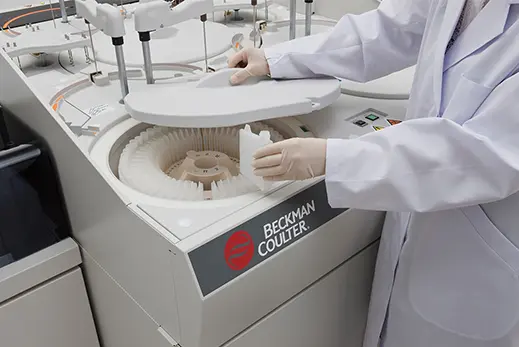
Beckman Coulter AU5810 maintenance and service
For independent reference labs, analyzer downtime means broken contracts and lost clients. When your AU5810 goes down, those samples don't wait - they go to your competitor. International labs have it worse - waiting weeks for parts to clear customs while samples pile up.
Block Scientific AU5810 service levels the playing field

Next-day response for contract labs
Because your SLAs don't have wiggle room.

Parts stocked domestically
No customs delays for international customers.

Real AU5800-experienced technicians
Not generalists learning on your dime.

Up to 50% less than OEM service contracts
Keep more margin on every test.

Preventive maintenance that protects your contracts
Avoid the downtime that loses clients.
Common AU5810 service needs we handle
Wash station optimization
High volume means accelerated wear - we keep yours functioning
Photometer calibration
Critical for accuracy at 2,000 tests/hour throughput
Probe alignment
Precision matters more at high speeds
Reagent delivery systems
Pumps and valves need regular attention at these volumes
Software optimization
Keep your AU5810 running latest validated versions
Troubleshooting your Beckman Coulter chemistry analyzer
When your AU5810 throws an error at 2 AM, you don't need a complicated flowchart. You need answers. Here's how to work through problems systematically.

Step 1: Check what the analyzer is telling you
What's the actual alarm message or error code?
Are reagent blanks, calibrations, or QC failing?
Is it affecting one test or multiple tests?
Did anything change recently (new lot numbers, maintenance, etc.)?

Step 2: Look for patterns
Is it just one chemistry that's mad, or several?
Specific sample types having issues, or everything?
Does the problem come and go, or is it consistent?
Did someone just crack open a new reagent lot?

Step 3: Check the basics (because it's usually something simple)
Reagent volumes good for your run size?
Wash solution fresh? (Old wash solution causes weird problems)
Water system producing the quality you need?
Lab temperature stable? (Chemistry doesn't like temperature swings)

When to call Block Scientific
If you've checked the obvious stuff and it's still not working, call us. We'll want to know:
The specific error codes you're seeing
What you've already tried
Any recent maintenance or changes
Your current test volumes
Our AU5810 specialists deal with these issues daily. Often we can fix it over the phone for our service subscribers.
Sell us your blood gas analyzer
Upgrading from a benchtop system? Consolidating POC devices? Your old blood gas equipment has value even if it's not running perfectly.
We buy all major blood gas platforms



EPOC, RAPIDPoint, RAPIDLab series
i-STAT systems
cobas b series
Your old analyzer becomes someone else's solution
That benchtop blood gas analyzer you're replacing? A smaller facility might run it for another decade. Even non-functional units have value for parts recovery.
We handle everything: evaluation, decontamination, removal, and logistics. Your trade-in credit applies directly to your EPOC purchase.
Still sending blood gases to the lab?
If you're currently transporting samples to a central laboratory or sending blood gases out entirely, you already know the pain points: sample degradation during transport, turnaround times measured in hours instead of minutes, and clinical decisions delayed while you wait for results.
Blood gases are time-sensitive. pO2 and pCO2 values start changing the moment blood leaves the patient. The longer the transport, the less reliable the result. And when you're managing a patient on a ventilator or working up metabolic acidosis, waiting 45 minutes for lab results means treating blind.
Why facilities move to bedside blood gas testing

Faster clinical decisions
Studies show POC blood gases enable treatment decisions 20+ minutes faster than central lab testing. For ventilator adjustments, sepsis protocols, and metabolic emergencies, that time matters.

No sample degradation
Testing within seconds of the draw means you're measuring actual patient values, not what happened to the sample during transport.

24/7 capability without 24/7 lab staffing
The EPOC doesn't need a dedicated laboratory technologist. Trained nursing, respiratory therapy, or other clinical staff can run the test at 3 AM without calling anyone in.

Lower total cost than you might expect
When you factor in send-out fees, STAT charges, and the clinical cost of delayed decisions, bedside testing often pays for itself quickly.
Why facilities move to bedside blood gas testing
The EPOC was designed for clinical staff, not laboratory technologists. Room-temperature card storage means no refrigerator in the unit. Automatic calibration means no daily QC procedures before patient testing. Wireless connectivity means results go directly to the chart without manual entry.
If your facility has avoided POC blood gas because benchtop analyzers seemed too complex or too maintenance-heavy, the EPOC is worth a look.
Comparing AU5810 to other chemistry analyzers

AU5810 vs AU680
Sure, you could buy two AU680s and run them constantly. But that's two sets of maintenance, two service contracts, two QC protocols, and probably two operators. One AU5810 gives you 66% more throughput with one of everything. Plus, having AU5800 series on your equipment list looks better when bidding for contracts.

AU5810 vs AU5820
The AU5820 is what the big corporate labs buy. The AU5810 is what smart independent labs buy to do the same work. Unless you're drowning in 1,500+ samples daily, that extra 2,000 tests/hour capacity just sits idle, eating service contract fees.

AU5810 vs Roche cobas 8000
The cobas 8000 is modular and fancy with lots of configuration options. It's also what the big hospital networks buy with their unlimited budgets. For independent labs, the AU5810 delivers the throughput you need without the complexity you don't.

AU5810 vs Abbott Alinity ci
Abbott pushes the Alinity hard to their existing customers. But "latest technology" means "highest price" and often "working out bugs." The AU5810 has been proven in thousands of labs worldwide. When you're betting your business on an analyzer, boring reliability beats exciting promises.
Frequently asked questions about the Siemens EPOC
Every refurbished EPOC includes the Host handheld, Reader, charger, and test cards to get you started. You'll have everything you need to begin testing once you complete your facility's validation process.
The Reader is the workhorse - it's built for years of continuous use. The Host is essentially a rugged handheld computer that lasts as long as you maintain the battery. With proper care, expect 5+ years of reliable operation from a refurbished system.
Yes. The Reader pairs with any compatible Host via Bluetooth. If you have working Readers and need a replacement Host, we can help with that configuration.
Yes. The BGEM Test Cards are identical for both the original EPOC and the NXS. Siemens continues manufacturing them. We stock them and can set up standing orders for your facility.
The analytical results are identical - same Reader, same test cards, same accuracy. The difference is the Host interface. The NXS runs Android with a higher-resolution screen. The original runs Windows Mobile. If your staff can use a smartphone from 2010, they can use the original EPOC.
Each test card includes sealed calibration fluid. The Reader automatically calibrates when you insert a card - about 2-3 minutes. No daily calibration procedures, no calibration gases, no manual intervention.
Arterial, venous, capillary, and cord blood - all with lithium or balanced heparin anticoagulation. The 92 µL sample volume works for adult and most pediatric draws.
The Host connects to your hospital Wi-Fi network. Results transmit directly to your HIS/EMR via HL7 protocol when testing completes. No docking station required. Configuration requires IT coordination during setup.
The EPOC stores results locally until connectivity is available. Results upload automatically when the Host reconnects. You don't lose data from Wi-Fi dead zones.
No. The EPOC is a moderate complexity test under CLIA. Your facility needs appropriate certification and personnel qualifications. This is true of all comprehensive blood gas analyzers.
Initial training takes about an hour for basic operation. The workflow is straightforward: insert card, wait for calibration prompt, introduce sample, read results. Competency assessment per your facility's POC program requirements.
Room temperature, 15-30°C. Keep in sealed pouches until use. Shelf life is up to 5 months from manufacture. No refrigeration required - this is a major advantage over competing systems.
The system validates the card during the calibration phase before you introduce sample. If a card is expired, damaged, or fails calibration, you'll know before wasting a blood draw.
The 92 µL sample volume is manageable for many neonatal draws, though the i-STAT's smaller volume cartridges (as low as 17 µL) may be preferred for extremely low birth weight infants. Evaluate based on your NICU's protocols.
Ready to bring blood gas testing to the bedside?

The Siemens EPOC delivers the clinical results your team needs - blood gases, electrolytes, metabolites, and hematocrit - in under a minute at the patient's side. No lab transport. No waiting. No transcription.
A refurbished original EPOC gives you that capability at a price that makes sense for your budget. Same test cards as the NXS. Same Reader. Same accuracy. Different impact on your capital budget.
Next steps:

Step 1.
Check our current EPOC inventory
Step 2.
Get test card pricing for your volume

Step 3.
Find out what your old blood gas analyzer is worth

Step 4.
Start testing at the bedside within weeks
Siemens Healthineers epoc® System, Refurbished - Includes epoc® Reader 10736398 and Host2 Motorola 10736387.
The Siemens Healthineers epoc® system is the best point of care testing device (POCT device) on the market right now. It’s one of the reasons we became an authorized Siemens distributor.

We put a lot of effort into finding the best instruments for our community so you don’t have to, and this POC diagnostic device is it.
This point of care testing device (POCT device) improves patient outcome, quality assurance, and patient testing workflows while transforming patient care delivery across healthcare pathways.
The epoc® Blood Analysis System gives you laboratory-quality results here and now, right at the patient's bedside.
A small, wireless, handheld point of care testing device allows you to bring the clinical laboratory with you:
- To the desktop of your medical practice
- In your air ambulance
- To your field clinic
- To quickly test results of other health products in development
The right point of care system for your family medical practice.
The epoc® system is a handheld, wireless point of care testing device to enable comprehensive blood sample analysis testing at the patient’s bedside on a single room temperature test card, with results in less than a minute.
- Streamline patient-testing workflow.
- Accelerate clinical decision-making.
- Simplify inventory management.
- Deliver real-time results and reporting.
It allows you to insource a lot of the patient care testing you’ve been outsourcing, getting a test result
in seconds rather than hours or days.

Streamline patient-testing workflow.
By moving testing to the patient’s side, caregivers, patients, and hospital administration all benefit from a less-complex testing process that improves turnaround times, patient care, and operational efficiencies.
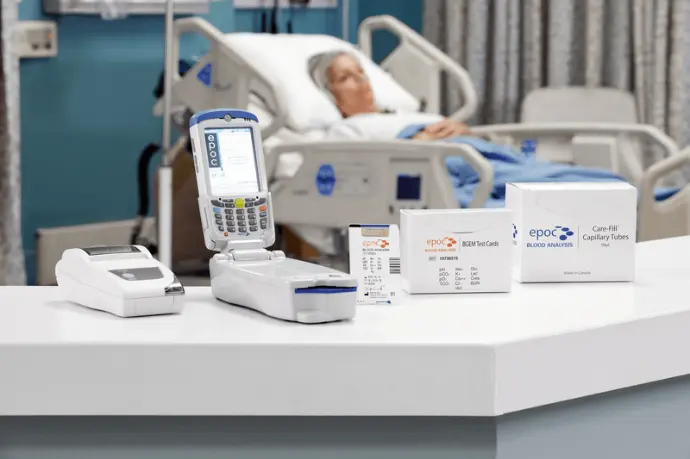
Accelerate clinical decision making.
Empower clinicians to make faster decisions with lab-quality results at the patient’s side, enhancing clinical decision making and improving patient outcomes.
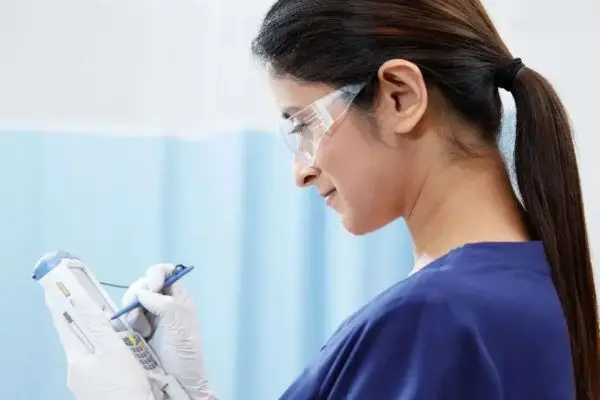
Deliver real-time results and reporting.
With an integrated, wireless connection, you can easily transmit results from the patient’s side to the EMR/LIS/HIS
in real time and gain centralized control of decentralized testing.
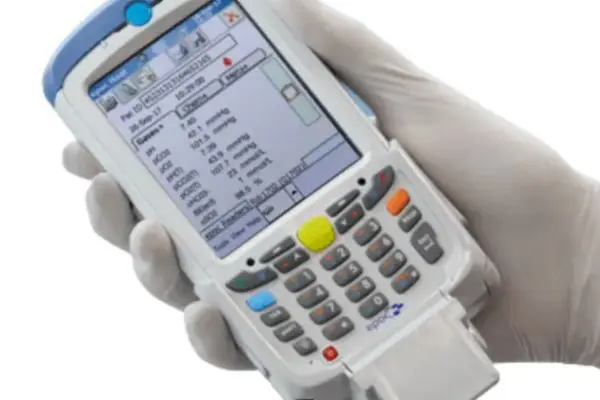
Simplify inventory management.
By incorporating a full menu on a single, room temperature-stable test card bar-coded for quality assurance, the epoc system delivers a more efficient and easy-to-manage patient-side testing program.
Specifications
Calculated Parameters | ||
Parameter | Unit of Measure | Measurement Range |
cHgb | mmol/L | 2.0-15.5 |
g/dL | 3.3-25 | |
g/L | 33-250 | |
cHCO3- | mmol/L | 1-85 |
mEq/L | ||
cTCO2 | mmol/L | 5-50 |
mEq/L | ||
BE(ecf) | mmol/L | -30 – +30 |
mEq/L | ||
BE(b) | mmol/L | -30 – +30 |
mEq/L | ||
cSO2 | % | 0-100 |
GFRmdr*† | mL/min/1.73m2 | 2–60 or >60 |
GFRmdr-a*† | mL/min/1.73m2 | 2–60 or >60 |
GFRckd‡ | mL/min/1.73m2 | 1-225 |
GFRckd-a‡ | mL/min/1.73m2 | 1-225 |
GFRswz§ | mL/min/1.73m2 | 1-275 |
AGap | mmol/L | -14 – +95 |
mEq/L | ||
AGapK | mmol/L | -10 – +99 |
mEq/L | ||
BUN/Crea | mg/mg | 0.2-400.0 |
Urea/Crea | mmol/mmol | 0.8-1615.4 |
mg/mg | 0.4-856.8 | |
A | mmHg | 5-800 |
kPa | 0.67-106.64 | |
A-a | mmHg | 1-800 |
kPa | 0.13-106.64 | |
a/A | % | 0-100 |
fraction | 0-1 |
Measured Parameters | |||
Parameter | Unit of Measure | Measurement Range | |
pH | pH units | 6.5–8.0 | |
pCO2 | mmHg | 5-250 | |
kPa | 0.7-33.3 | ||
pO2 | mmHg | 5–750 | |
kPa | 0.7–100 | ||
TCO2 | mmol/L | 5-50 | |
mEq/L | |||
Na+ | mmol/L | 85–180 | |
mEq/L | |||
K+ | mmol/L | 1.5–12.0 | |
mEq/L | |||
Ca++ | mmol/L | 0.25–4.00 | |
mg/dL | 1.0–16.0 | ||
mEq/L | 0.5–8.0 | ||
Cl- | mmol/L | 65–140 | |
mEq/L | |||
Hct | % PCV | 10–75 | |
L/L | 0.10–0.75 | ||
Glu | mmol/L | 1.1–38.5 | |
mg/dL | 20-700 | ||
g/L | 0.20-7.00 | ||
Lac | mmol/L | 0.30–20.00 | |
mg/dL | 2.7–180.2 | ||
g/L | 0.03–1.80 | ||
Crea | mg/dL | 0.30–15.00 | |
μmol/L | 27–1326 | ||
Hct | % PCV | 10–75 | |
L/L | 0.10-0.75 | ||
BUN | mg/dL | 3-120 | |
Urea | mmol/L | 1.1-42.8 | |
mg/dL | 7-257 | ||
g/L | 0.07-2.57 |
Institutions should establish and set their own normal range values.
* Values >60 will be reported as >60 mL/min/1.73 m2.
† IDMS-traceable MDRD type
‡ CKD-EPI equation